

By Gabi Falanga
Who thought that using a car seat would be so complicated? We recently wrote about the types of car seats available on the market and which age groups they’re appropriate for. But once you’ve bought the car seat, there are many more things to be aware of when actually using it. Our three-part series will give you the guidance you need to use your car seats safely.
Rear facing: In South Africa, babies who weigh less than 9kg are required by law to sit in a rear-facing car seat. The American Academy of Pediatrics recommends rear facing until a minimum age of 2. Babies and toddlers have heavy heads which are out of proportion to their bodies: A baby’s head makes up 25% of its body weight, compared to 6% for an adult. Their bones haven’t ossified (hardened) yet either, and these factors mean that a baby in a forward-facing car seat is at a much higher risk of breaking their spine in an accident, causing paralysis or death. Extended rear facing car seats are available for children up to 18 or 25kg, depending on the seat.
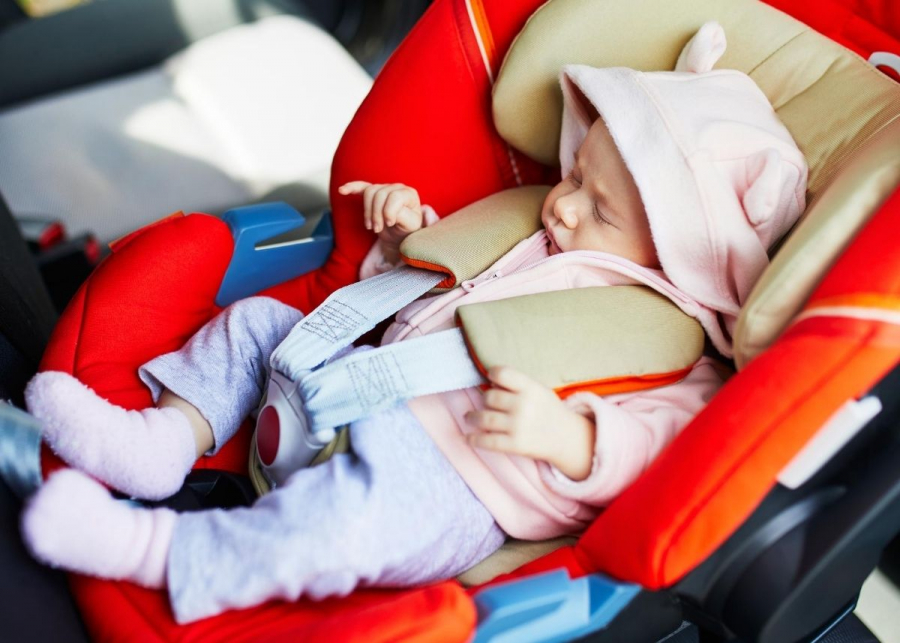
Sleep safety: Car seats are designed to protect babies and children from crashes. Newborn babies and those that don’t yet have good head control, are at a high risk of positional asphyxiation, or suffocation, when they’re in their car seats for extended periods of time. Positional asphyxiation happens with the baby is in a position, for example, slumped over forwards, that restricts the breathing, movements of the chest or obstructs their mouth or nose. An infant car seat should be reclined to 45 degrees for newborns and 37 degrees for babies with head control. Many car seats have a marker on them to show when the car seat is at the correct recline angle. Babies under four weeks shouldn’t spend more than 30 minutes at a time in their car seats, and babies older than this shouldn’t spend more than two hours at a time in their car seats. This includes using the car seats as part of a travel system. To help prevent your newborn from flopping over side-ways, you can use rolled receiving blankets on either side of their head. Do not make use of other non-regulated retail products, like forehead strap, head support cushions, or chest straps, as these minimise the efficiency of the car seat during an accident.
The straps: The straps for the five-point harness of a child in a rear-facing car seat must be at or within an inch below the shoulders. The straps in a forward-facing seat must be at or an inch above the shoulders. In most car seats, the five-point harness can only be used until the child is 18kg (there are some exceptions), before the car’s seat belt will be used to strap the child into their seat. Your car seat’s manual will contain the weight limits. To make sure that the harness is tight enough, you can do the pinch test. Try to pinch the webbing (straps) at your child’s shoulders. If you’re able to grasp the material, it’s too loose. Look for slack in the belt around your child’s hips and torso and pull the harness tight until you’re no longer able to pinch the webbing between your fingers when you try.
Look out for part 2 tomorrow, where we’ll look at your options for where to put the car seat in your car, how to secure it properly and other safety tips.