

By Gabi Falanga
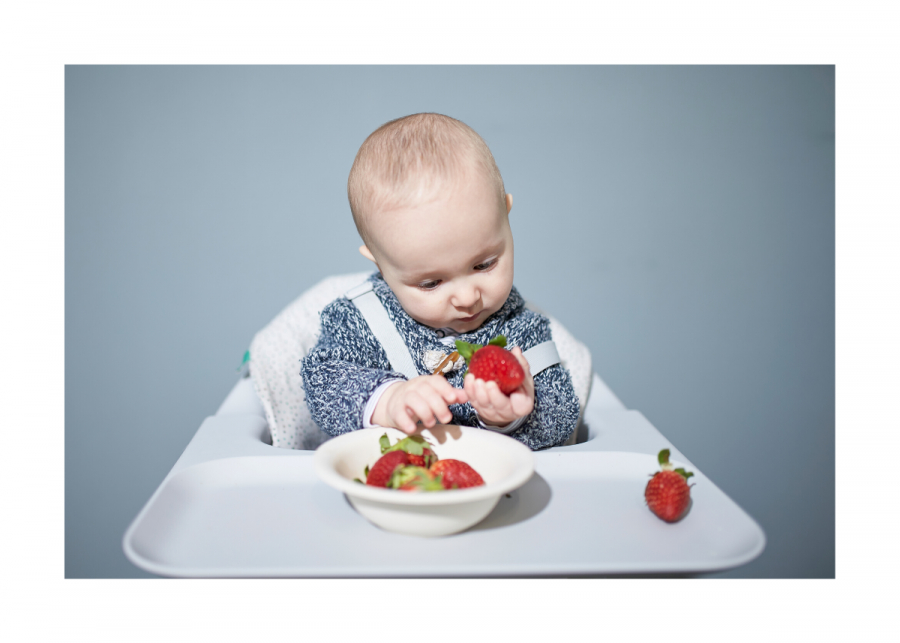
Baby-led weaning is a fun, messy way of introducing solid foods to your baby when they are developmentally ready. The term was coined by mother, health visitor and midwife, Gill Rapley. At around six months of age, babies who are born full term and are healthy normally display signs that they are ready to begin eating solid food. If you’re following the baby-led weaning approach you won’t be making purees, but your baby will join the rest of the family for meals and feed themselves what you’re eating.
Cut whatever you’re eating into finger length strips (similar to a chip) or give them food with a natural ‘handle’, like broccoli, and allow them to feed themselves with their hands and fingers. Your baby will be delighted to be part of family meals and will learn how to eat properly by mimicking you. And they will have a whale of a time playing with and exploring the food with their hands and mouths. Later, once they’ve become more coordinated, you can give them a spoon to try and feed themselves with.
By doing this, your baby develops confidence and independence, and because they are in control over what they eat, and how much they consume, they develop a healthy understanding of when they are hungry and when they’ve had enough to eat. A study by The University of Nottingham showed that babies weaned using solid finger foods were likely to develop healthier food preferences and were less likely to become overweight than those who were spoon-fed pureed food.
Giving your baby a variety of healthy foods will help them become familiar with different tastes, textures, consistencies and colours. Initially you’ll have to make sure that hard foods like carrots have been steamed to make them slightly softer. Sticking to whole, unprocessed foods as far as possible is the healthiest option for both you and your baby. Avoid giving them take-away or junk food, sugary foods or anything with a lot of salt in it.
Baby-led weaning is largely about experimenting and while your baby won’t always actually consume a lot of what you offer them, it’s important not to try and feed them, or force them to eat. The term ‘weaning’ can cause confusion, and it’s essential to continue giving your baby breastmilk or formula as their main source of nutrition until they turn 1. The foods you give them during meal-times will supplement the milk, helping to meet your baby’s energy and nutritional requirements.
Some parents are hesitant about baby-led weaning because they worry that it’s a chocking risk. But, provided the baby is developmentally ready, is sitting upright while eating, has been given appropriate food, and is feeding themselves – they are unlikely to choke. Babies will chew on the food – even if they have no or few teeth – before swallowing. They also have a well-developed, protective gag reflex which means that in most cases they will gag food out if a big piece gets to the back of their throat.
Most of all, if you’re going to do baby-led weaning be prepared for a mess, and have fun as your baby tries out different foods for the first time.