

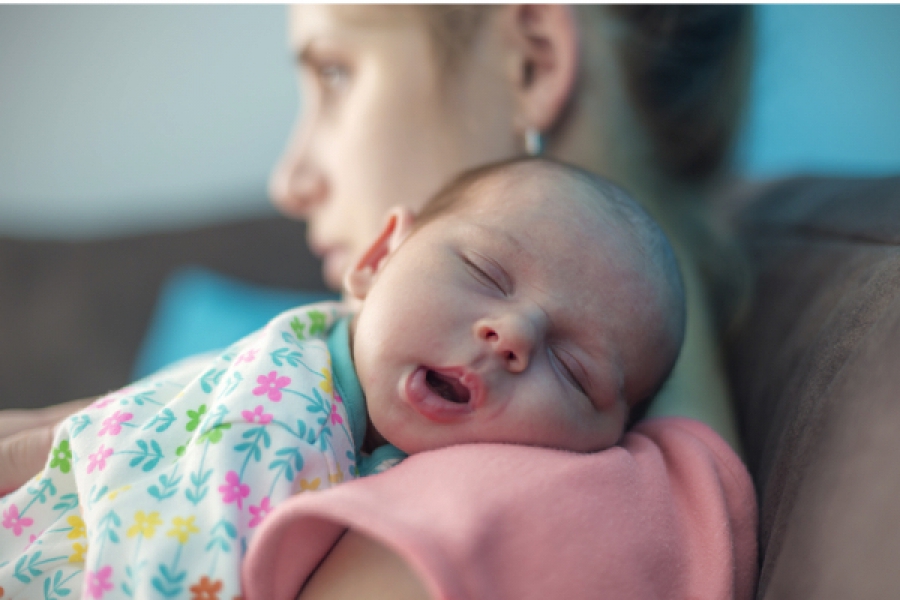
PND (also known as post-partum depression) is a type of depression that occurs in a mother a few weeks or months after a baby is born. Contrary to popular belief, it is not the blues that strikes almost all moms in the first week after birth. It rears its ugly head only a few weeks or months after that.
According to a study done by the Canadian Paediatric Society, postpartum depression begins in or extends into the postpartum period and core features include dysphoric mood, fatigue, irritability, sleep disturbances, anxiety, excessive guilt and suicidal thoughts. The diagnosis requires that symptoms be present for at least one month and result in some impairment in the mother’s functioning.
How does PND affect baby?
One of the biggest dangers is withdrawal by the mother. When in the throes of dark depression, the mother becomes less and less involved with the baby. That can include the general care taking of the infant (regular nappy changes, responding to cries, etc). In turn this can of course also hamper the very important bonding that needs to take place between mother and baby.
Studies (The impact of postnatal depression on infant development. Murray LJ Child Psychol Psychiatry. 1992 Mar; 33(3):543-61) have shown that boys are more vulnerable and distressed by maternal depression than girls.
Parenting and PND
Interestingly enough, PND not only affects mothers, but fathers as well. The effect can be felt by the whole family, especially as the father oftentimes take over some of the motherly duties as the mother is just not able to tend to it as a consequence of this illness. But even more alarming – fathers can also suffer from PND, and chances for this are best when the mother is or was suffering from it.
Says first-time mom Suzanne: “When it came to a stage where I realised my baby is crying in her cot for fifteen minutes already with a dirty nappy and I just couldn’t get myself out of the bed to tend to her, I knew we were in trouble. I was in trouble. A mom’s biggest job is taking care of her baby. Body, mind, and spirit. And I wasn’t providing any of that. Who knows what the effect will be in the long run if this is not dealt with and reversed?”
It was then that she decided to take action. Which took so much energy from her, as she struggled to even get out of bed and change out of her pyjamas. “We found a psychiatrist specialising in post-natal depression and he agreed to see me immediately. This was serious stuff. The next day he booked me into a clinic for three weeks to get hands-on treatment, counselling, and on anti-depressants.”
It was the best decision for this family, as the mother was doing infinitely better when she came out of the clinic. Not totally cured, it is a lengthy process, but at least stabilised to the point where she can care for her baby again and shower her with love (and also change her nappy!).
Tips to live by
- Crying all the time means you need help. Go out there and get it, speak up!
- PND doesn’t mean you’re a bad mom or that you cannot do this parenting thing – it means you’ve got an illness that is beyond your own control. Help is available and this can be fixed relatively easy with some therapy and temporary medication.
- Don’t despair! It happens to a lot more people than you know. People tend to not talk about this, but that doesn’t mean they are not also feeling lost. Recovery is in easier reach than you think.
- Eat regularly, even if you are not hungry, your body needs the energy.
Further reading on the matter
We'd would love to hear your own experience of PND and how you overcame it.
– Jana Cloete